
A Full Moon Rising | image by Sophia Bennett © Michelangelo Foundation
es devlin turns homo faber 2026 into ‘an island of light’ in venice
Homo Faber returns to Venice from September 1st–30th, 2026, with its fourth edition, titled An Island of Light. Taking place across Fondazione Giorgio Cini on San Giorgio Maggiore, the biennial brings together more than 500 artisans from over 70 countries. Es Devlin, serving as artistic director, develops the exhibition as a sequence of immersive installations that respond directly to the island, its architecture, gardens, and relationship with the surrounding lagoon. Across 15 installations, light becomes a recurring material. Water reflects the Palladian architecture, mirrors alter the scale of objects and spaces, and projections, movement, and sound introduce another layer to the experience of craft.
The title An Island of Light begins with Devlin’s own experience of arriving in Venice and seeing San Giorgio from above. ‘When I look at an aerial view of this place, if I’m lucky enough to have a clear day when I’m landing, I can see this island like an object, like a jewel, like a fragile egg, like something I might pick up and hold very carefully so I don’t break it.’ she shares during the opening of Homo Faber 2026, where designboom was present. ‘And yet, when I’m on the island, I have a very different sensation. I feel held by the stone, by the architecture, by the garden, by the cypresses. They call this island the lungs of Venice. I want you to hold the taste of the word ”light” and the word ”island” while you walk through the trees and through the architecture.’
The opening follows our earlier conversation with Alberto Cavalli, executive director of the Michelangelo Foundation, who spoke with us ahead of this year’s biennial about Homo Faber’s wider effort to bring the handmade object and the people behind it back into focus. An Island of Light now gives that idea a physical form, using Devlin’s installations to move attention beyond the finished object and toward the materials, tools, hands, and knowledge involved in its making.

A Great Turning | all images by Giulio Ghirardi © Michelangelo Foundation, unless stated otherwise
from the artisan’s studio to an index of hands
The exhibition opens with A Language of Hands, an installation conceived as an artisan’s studio. Es Devlin introduces the visitor to the atmosphere of making. Multimedia projections and sound evoke a workshop after its inhabitants have left, placing the emphasis on the people and gestures behind the work. ‘The first thing you encounter is a studio, an atelier, and I hope you will feel like you’ve walked in just as 500 artisans have finished their work for the day. As any of you who have spent time in an artisan studio or an artist’s studio know, I’ve never seen anyone not smile when they walk into mine. I think you feel vividly happy when you’re surrounded by the quality of time passing when people are making things,’ the British artist and designer notes. ‘One thing this exhibition is inviting us to remember is that consciousness in humans is important. I read recently that if we understood the body better, there wouldn’t be a word for a mind. We are conscious from the soles of our feet, we make decisions with the hair on the back of our necks, and we think with the tips of our fingers. When you enter the first room, I hope you’ll have a feeling of an environment of people who do just that,’ she adds.
This focus on the body runs through the exhibition design. In most cases, craft is encountered through its finished form, as a glass vessel, a textile, a piece of furniture, or an object placed on a plinth. In An Island of Light, the route begins with the conditions of making. The hand, the workshop, the passing of time, and the physical knowledge involved in working with a material become part of the exhibition.
The following rooms continue this shift in perspective. An Index of Artisans presents black-and-white portraits of the makers participating in Homo Faber, bringing the people behind the objects into view. In An Alphabet of Objects, more than one hundred works are transformed into projected silhouettes. A large moving cylindrical structure casts their forms across the space, creating a changing visual language of shadows. Devlin moves between the maker and the object, between physical material and projected image, repeatedly changing the scale and conditions through which craft is seen.

a large kinetic mirror responds to changing daylight | image © designboom
using water, wood, and light as exhibition materials
The exhibition then extends into the gardens and historic spaces of the Fondazione Giorgio Cini, where A Library of Lungs introduces curved wooden structures inspired by Devlin’s paper sculptures. Installed in relation to the gardens of San Giorgio, the work refers to the description of the island as one of the ‘lungs of Venice.’
Water becomes the central element of A Full Moon Rising, installed in the former Piscina Gandini. A semicircular structure holding moon jars and vessels rises from the pool, while light and reflections move across the water. The installation brings together the history of containers made to hold and transport water with water itself, turning the former swimming pool into a part of the display.
In A Rooted Ascent, a multi-level cork structure organizes works made from wood alongside objects produced through the weaving of natural materials. The installation is accompanied by makers working live in the space, bringing process into direct contact with the finished pieces.

devlin works with the architecture of san giorgio maggiore
The historic architecture of Fondazione Giorgio Cini becomes increasingly present as the exhibition develops.
In An Infinite Birdsong, shaped and backlit mirrors create a nocturnal Venetian environment. Handmade birds and insects emerge from the windows of the room, while jewelry inspired by similar forms is displayed at the center. Porcelain, metal, glass, and paper appear alongside reflections and shadows, creating a space where the objects and the architecture are visually intertwined.
One of Devlin’s most direct interventions is A Great Turning, installed in the Palladian cloister. A long pool of water reflects the arches of the portico and a large kinetic mirror responds to changing daylight. The installation works with the existing geometry of the cloister, using reflection to alter the visitor’s perception of its symmetry and depth.
In the Ambulatory of the Palladian Refectory, A Luminous Ark introduces illuminated paper sculptures of Venetian wildlife. Designed by Devlin and made by Chinese paper artist Wen Qiuwen, the suspended birds appear throughout the space like lanterns.

a semicircular structure holding moon jars and vessels rises from the pool | image © designboom
from white light to a rainbow of forms
Inside the Palladian Refectory, Devlin develops two contrasting installations around light and color. The first one, dubbed A Feast of Light, gathers white objects made from porcelain, glass, textiles, paper, and other materials around a large illuminated table. A vertical beam of light moves through the monumental room, while the reflective surface of the table amplifies the monochrome arrangement. White objects that might otherwise appear visually similar reveal different degrees of opacity, texture, reflection, and translucency.
The following installation, A Rainbow of Forms, takes the opposite approach. Color becomes the central element. Objects made from materials including plastic, enamel, resin, and glass are arranged on reflective shelves and rotating structures beneath a mirrored ceiling. The space produces a kaleidoscopic environment in which objects, colors, and reflections continually multiply.
Before the route reaches the Borges Labyrinth, Twenty Silent Songs occupies the Cypress Cloister. The installation consists of 20 rectangular panels framing circular works inspired by the sound waves of 20 imaginary bells. Each work is interpreted by a different artisan or atelier from five continents. The project draws on the history of the cloister as a place of study and prayer and on the bells of the Basilica di San Giorgio, translating an imagined acoustic experience into form.

light and reflections move across the water | image © designboom
ALBERTO CAVALLI ON CREATIVITY, COMMUNITY, AND THE JOY OF MAKING
The fourth edition of Homo Faber brings together more than 700 objects by more than 500 artisans from 70 countries. For Alberto Cavalli, Executive Director of the Michelangelo Foundation, the numbers only tell part of the story. Organizing the biennial, he says, is challenging ‘creatively, humanly, financially,’ but this difficulty is also connected to the ethos of the artisans whose work the event celebrates. ‘The work that slips out easily from your fingers is not worth pursuing,’ Cavalli says. ‘The fruits that you can pick up on low-hanging branches are maybe not the most interesting ones.’ For him, the effort involved in building Homo Faber reflects the wider idea behind homo faber, the human being capable of shaping the world around them through talent, vision, and creativity. ‘Now more than ever, proclaiming the importance of homo faber matters and makes a difference,’ he adds.
Behind the scale of An Island of Light, Cavalli identifies a set of values that shape the Michelangelo Foundation’s wider vision. The first concerns human creativity, individuality, and freedom of expression. Speaking about younger generations and the increasing influence of digital systems, Cavalli jokes that while Grace Jones once sang Slave to the Rhythm, today’s generation risks becoming ‘a slave to the algorithm.’ His concern is mainly about the pressure to conform to systems that increasingly shape how people see themselves and present their ideas. In contrast, he sees making as a space in which individual experience and creativity can take a more direct form. Working with one’s hands, materials, and personal knowledge allows makers to develop and communicate a vision that is not reduced to a predetermined image. The second value is community. Cavalli points to a contradiction in contemporary life, mentioning that digital technologies have made constant communication possible, yet isolation continues to grow. ‘The more you feel alone and left to your own devices, the more you feel weak,’ he highlights. At Homo Faber, the ambition is to create a community in which makers, students, collaborators, and visitors can come together and ‘feel accompanied, heard, seen, embraced, appreciated.’ The final value is joy. For Cavalli, the artisans gathered in Venice demonstrate a form of satisfaction that comes directly from making and transforming the world around them. ‘The artisans are here to teach us the joy that comes from making, from shaping the world according to your vision, according to your hopes, dreams and expectations,’ he comments.
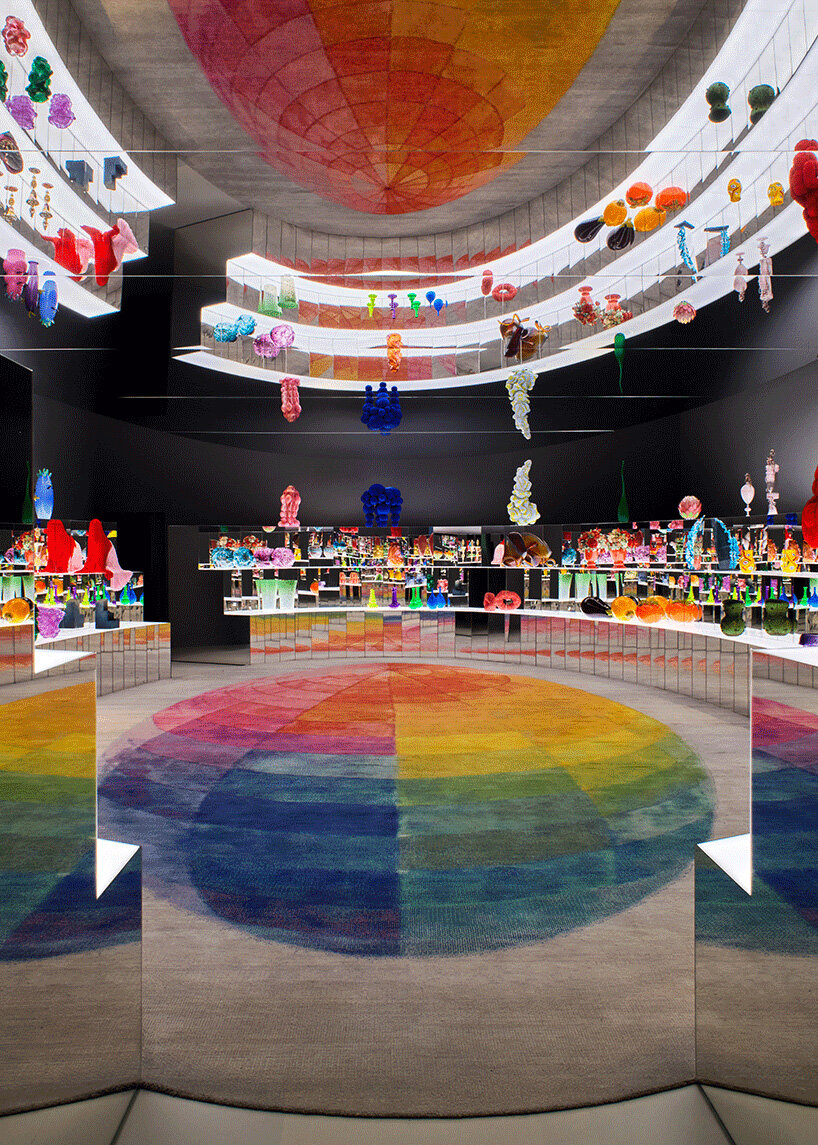
A Rainbow of Forms
a movement beyond objects
The mayor of Venice, Simone Venturini, describes the event as something larger than an exhibition. ‘Homo Faber is not an exhibition, it’s a movement, and right now we need to push for a movement in favor of beauty, harmony and authenticity, in a world that is very material but also troubled. Beauty, authenticity, craftsmanship, heritage can heal the wounds of a very troubled world, and we can do it here, in a neutral space, in an old monastery, in the most important city for art, culture, intercultural value, and dialogue,’ he shares. ‘I think that’s not just about Homo Faber, or only about a product or craftsmanship. It’s about soul and humanity. This is not an exhibition about things, goods, or objects; it’s a movement about humanity, and about soul.’
Devlin’s direction gives this idea a physical form. An Island of Light organizes 700 works through a series of changing environments. Objects appear alongside the materials, tools, gestures, and processes connected to their making, while the architecture of San Giorgio Maggiore becomes part of the experience. Light moves through the exhibition in different ways. It reflects off water in the former swimming pool, enters the Palladian cloisters, catches mirrored surfaces, and transforms objects into silhouettes and shadows. Color and material also shape the route, moving visitors between different atmospheres and spaces. The exhibition design places the objects within a wider context without taking attention away from the makers themselves. Throughout the 15 installations, Devlin returns to the relationship between the finished work and the hand, the material, the workshop, and the accumulated knowledge behind each practice.
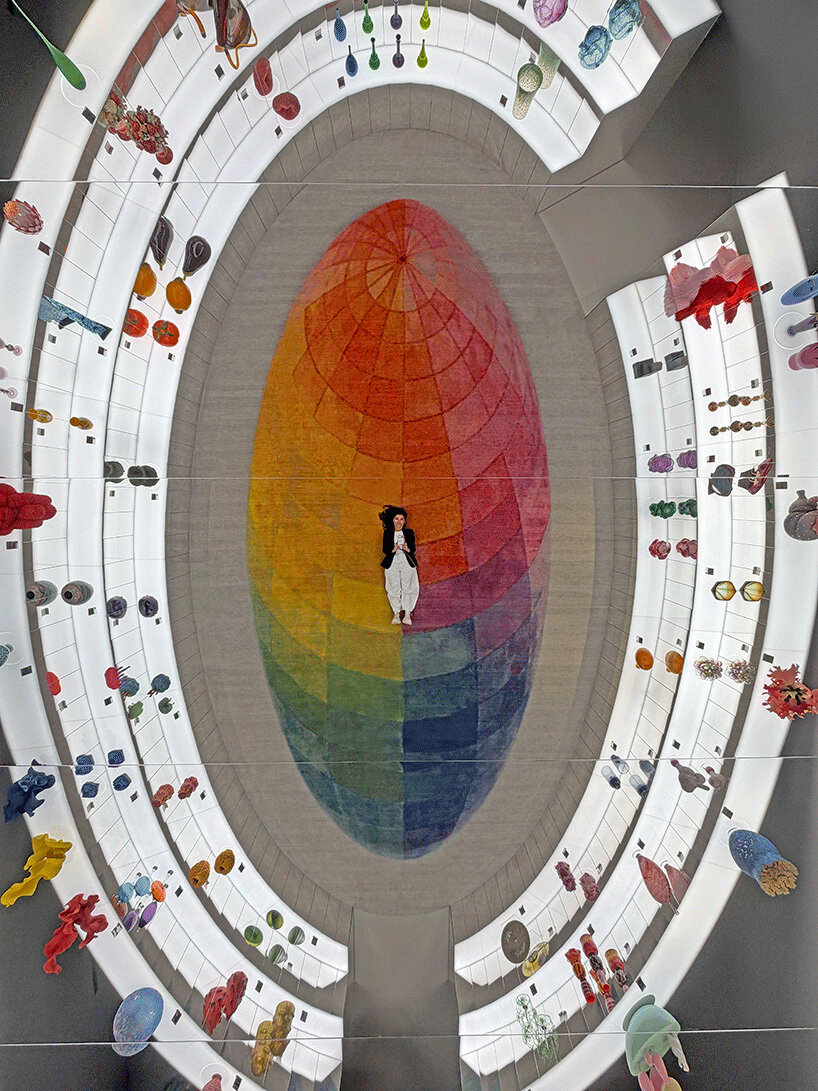
objects made from materials including plastic, enamel, resin, and glass are arranged on reflective shelves
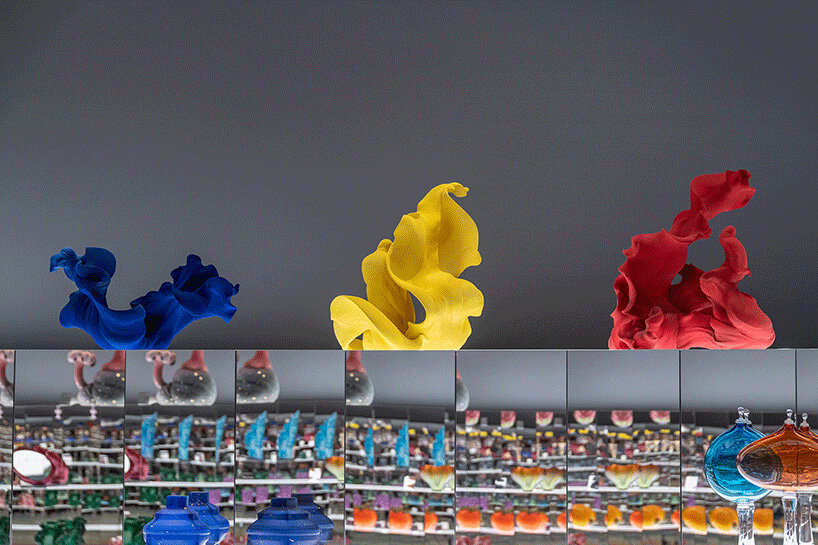
Dynamic Bowls: Troubled Waters, Blue Velvet, Yellow and Red by Eglė Einikytė-Narkevičienė, artisan | image by Sophia Bennett © Michelangelo Foundation

An Alphabet of Objects
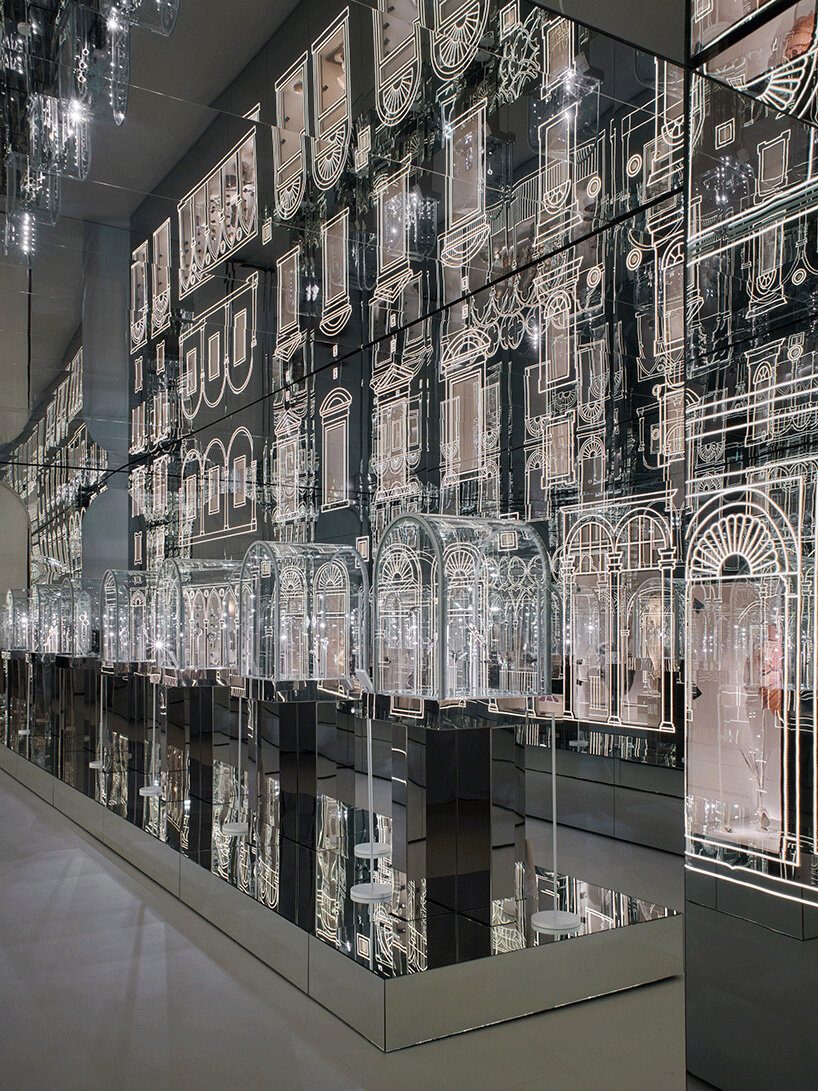
An Infinite Birdsong
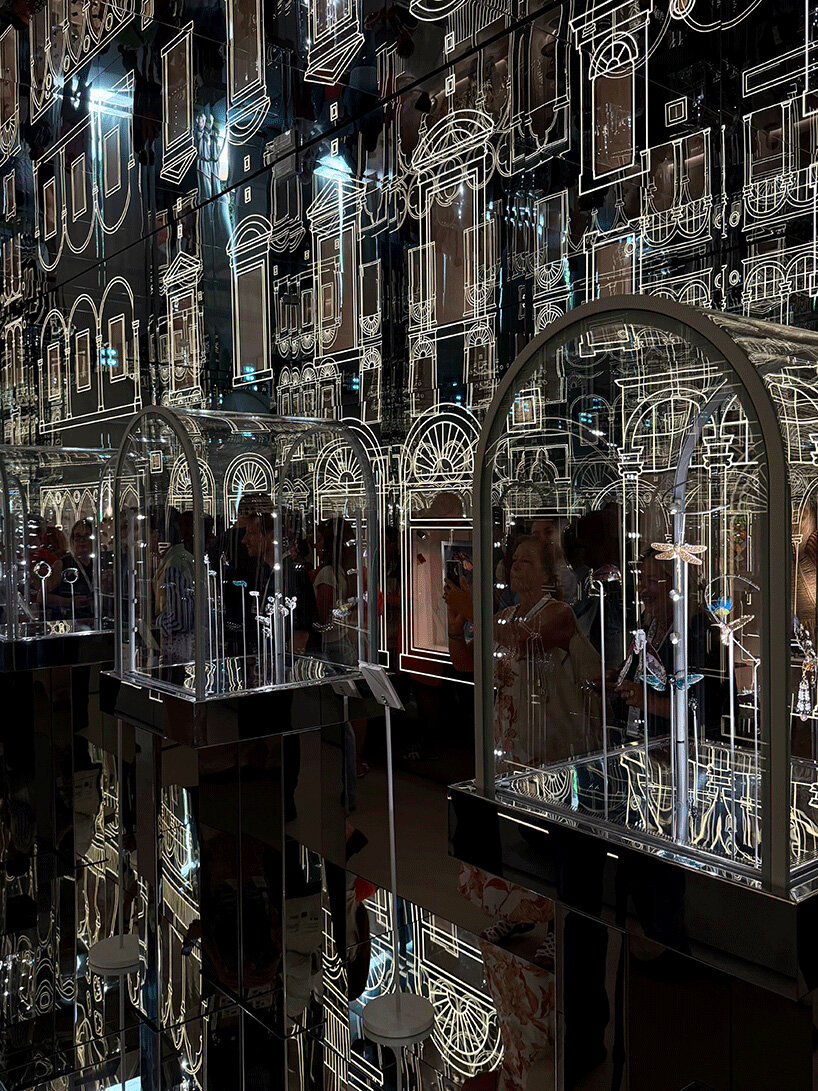
shaped and backlit mirrors create a nocturnal Venetian environment | image © designboom
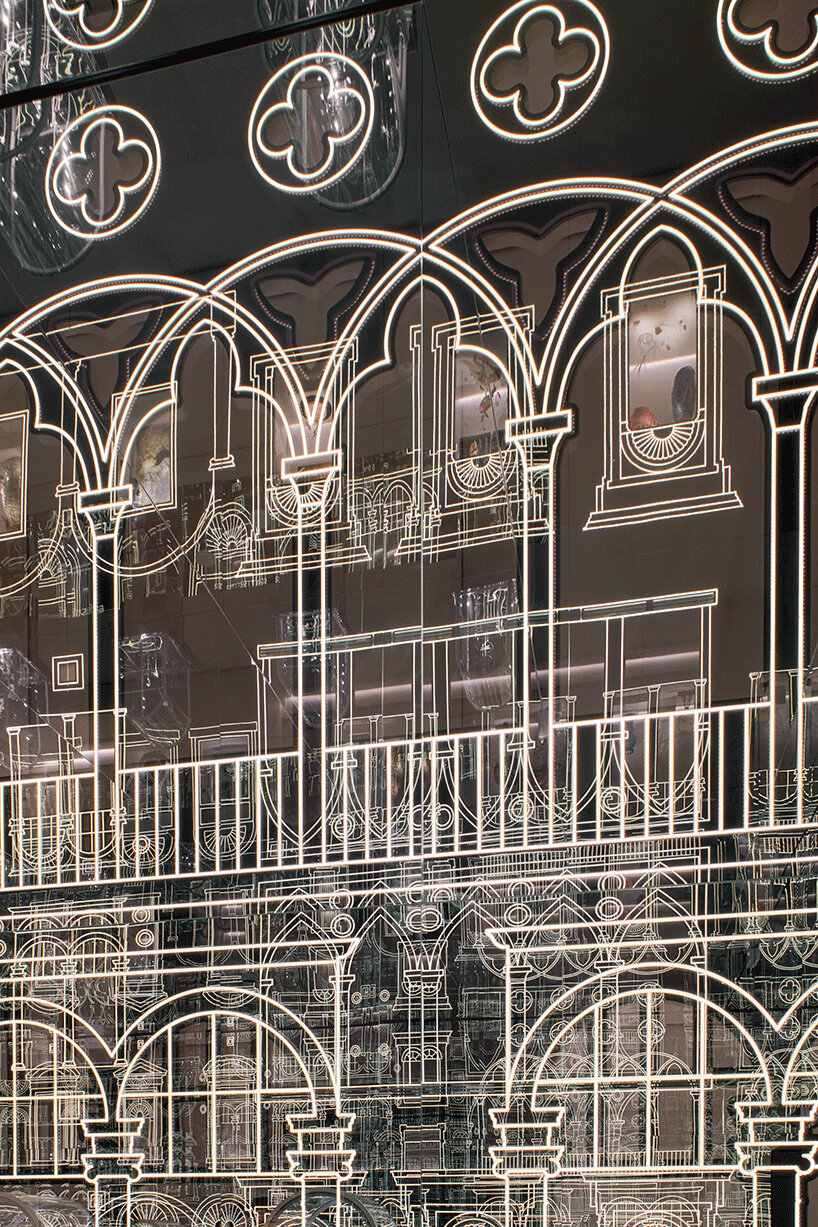
jewelry is displayed at the center
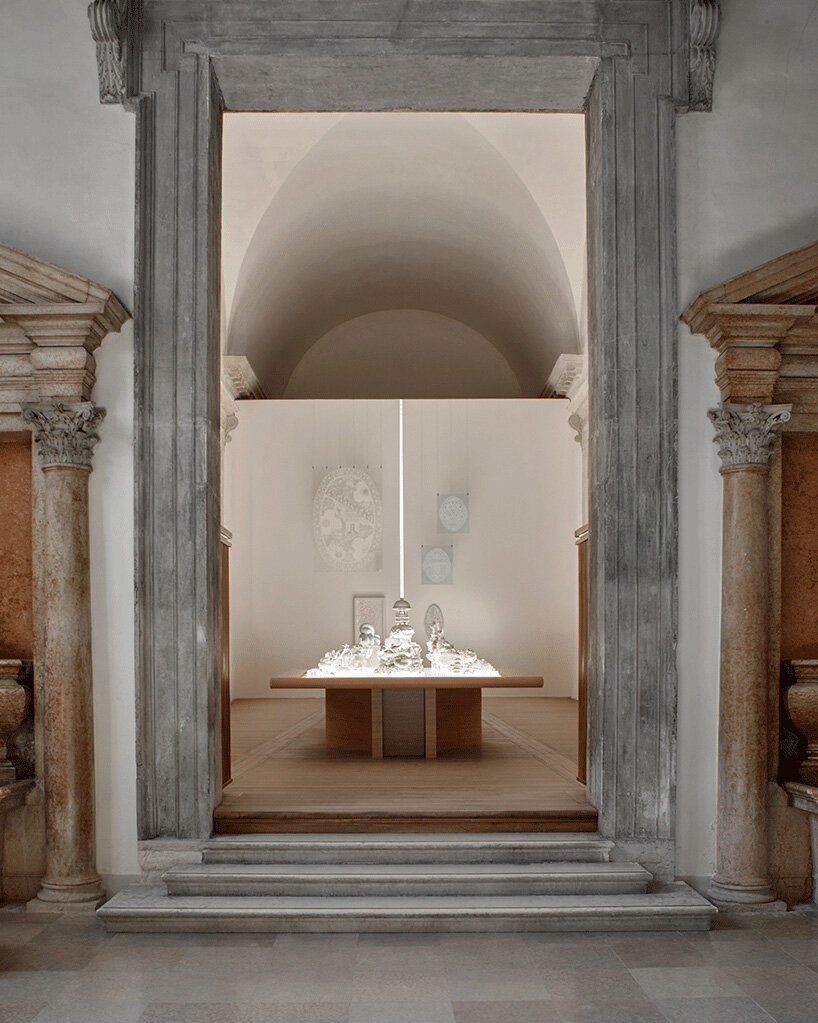
A Feast of Light

white objects sit around a large illuminated table
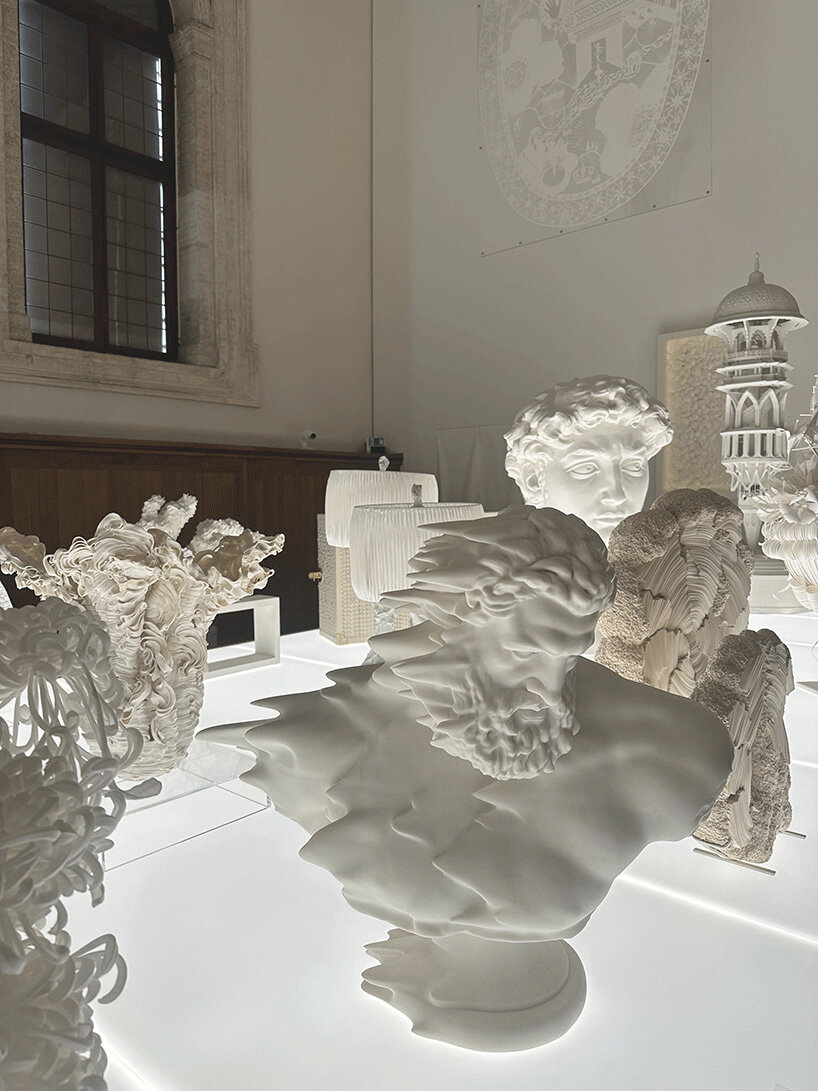
the reflective surface of the table amplifies the monochrome arrangement | image © designboom
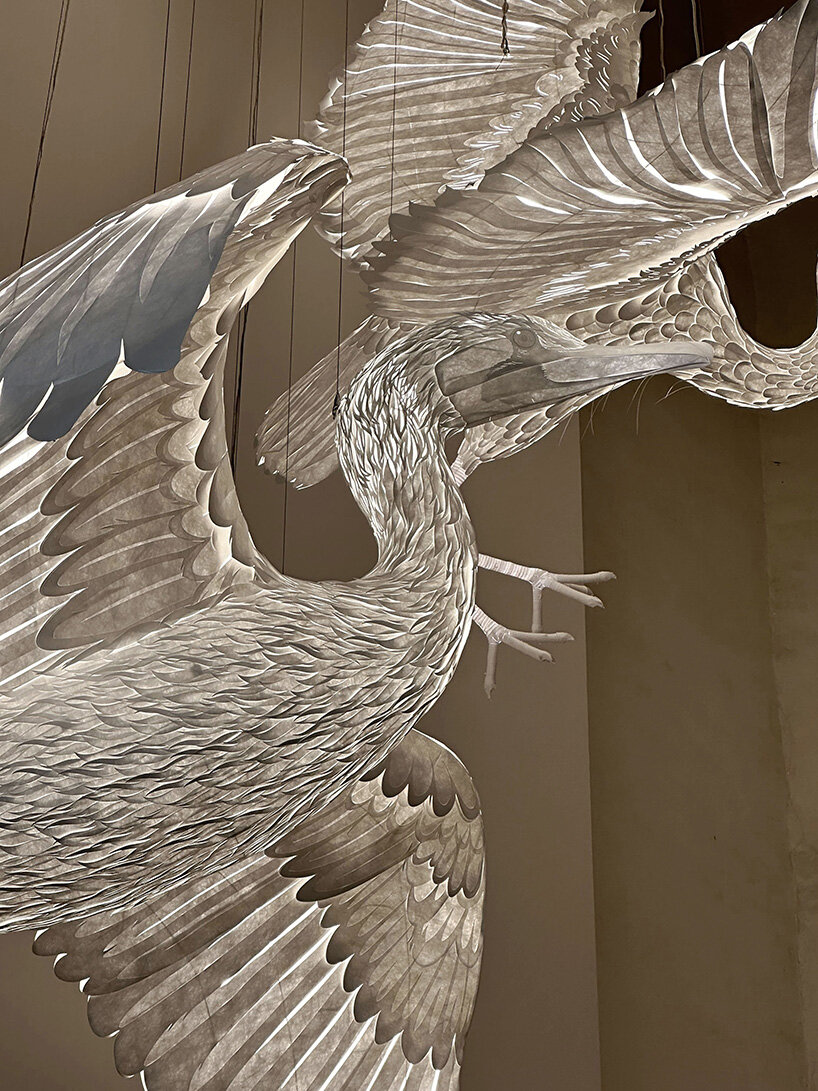
A Luminous Ark | image © designboom
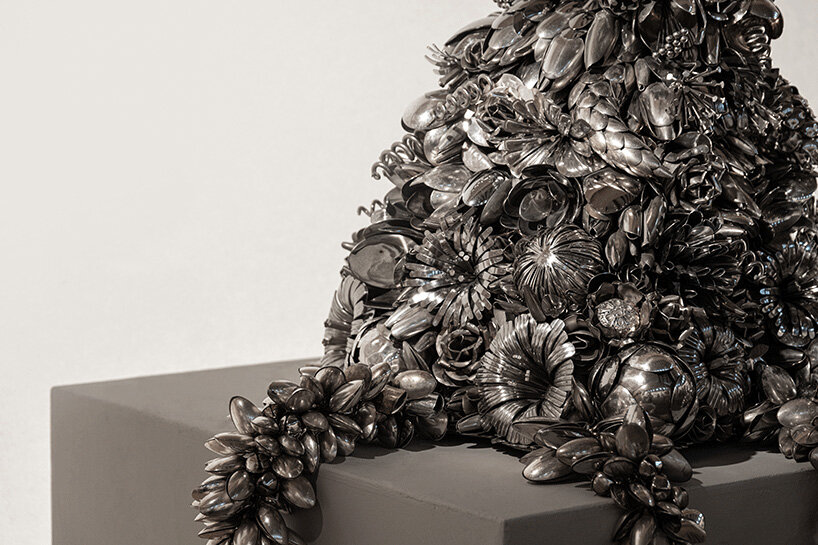
Moon Flower, Ann Carrington | image by Alexandre Vazquez © Michelangelo Foundation
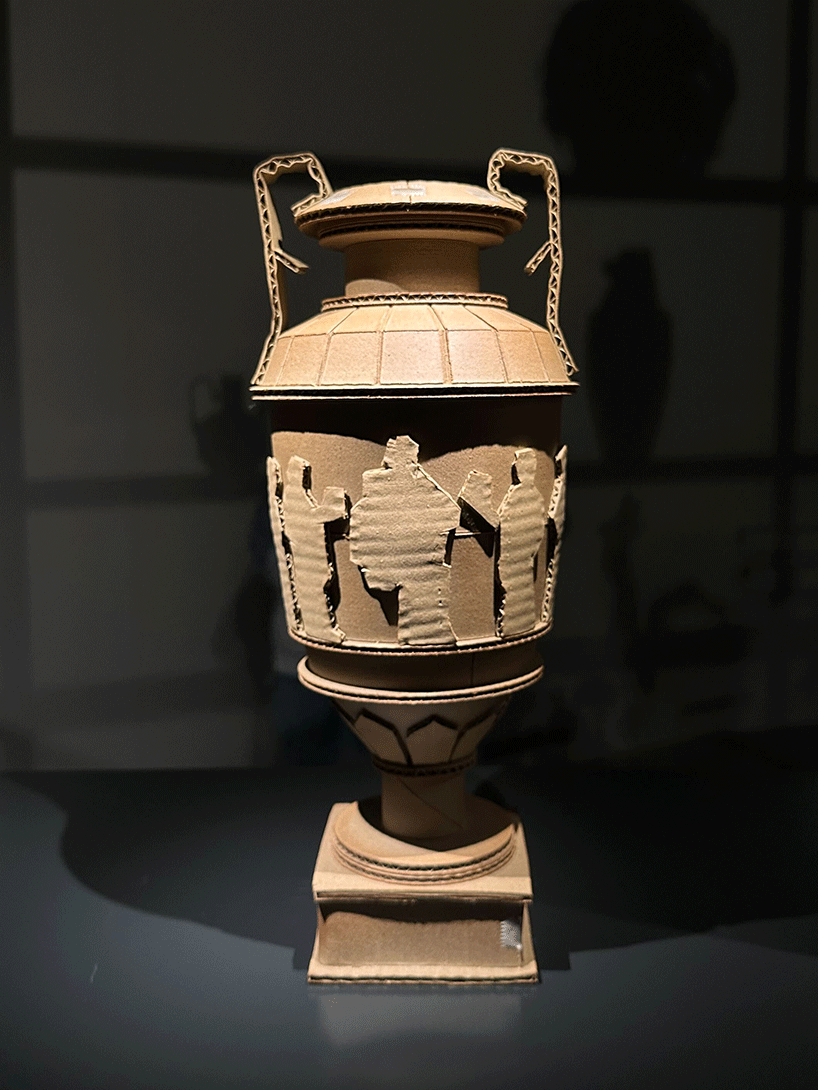
Ceramic piece by Jacques Monneraud | image © designboom
project info:
name: Homo Faber 2026: An Island of Light | @homofaber
artistic director: Es Devlin | @esdevlin
curated by: Michelangelo Foundation for Creativity and Craftsmanship
partners: Fondazione Giorgio Cini and Fondazione Cologni dei Mestieri d’Arte
location: Fondazione Giorgio Cini | @fondazionecini, San Giorgio Maggiore, Venice
dates: September 1st–30th, 2026
The post homo faber 2026 brings 500 craft artists to venice in es devlin’s ‘island of light’ appeared first on designboom | architecture & design magazine.
